By Ebuka Onyekwelu, Ph.D
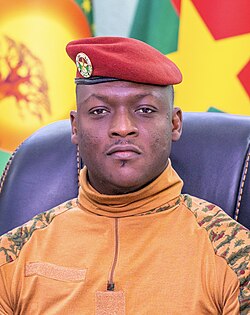
Burkina Faso’s military leader, Captain Ibrahim Traore, has counseled his countrymen and women to forget about their country’s return to democracy. Captain Traore, who took over the leadership of his country with the barrel of a gun in September 2022, has remained in power since then for nearly four years. Initially, the military leader promised to return power to an elected civilian government after he installed himself as Burkina Faso’s President in a counter-coup, which displaced a nine-month-old military dictatorship in the country. However, in a turn of events, he has banned political parties and opposition earlier this year and now is urging his countrymen and women to “forget about democracy”.
Governance challenges in Africa have raised a series of questions about the viability of the democratic system and its relevance to Africa. More precisely, there are questions about whether the democratic system offers the required nuances that meet African peculiarities in the continent’s pursuit of development or continental fulfillment. Many feel that Africa needs a homegrown variety of governance system that meets its precise realities. However, a military dictatorship raises concerns about human rights, abuse of power, and corruption. Military dictatorship also raises concerns about building proper governance structures that support growth, sustainability, and the aspirations of the citizenry.
Unfortunately, the African continent has been through the experience of military dictatorship before, and it did not solve the leadership problem; instead, it compounded the challenge. Yet, decades later, many Africans are happy to see their countries return to military dictatorship, reflecting a most compelling spectacle of the failures of civilian or democratic rule.
The 38-year-old leader of Burkina Faso, Captain Ibrahim Traore, might wish to extend his rule for the next four decades or more, as it is in many African countries like Cameroon, Congo, etc, where civilian rulers have spent over forty years in office.
Notwithstanding, the major concern remains: is it possible for African leaders to just focus on meeting the needs of their people and making their country better, irrespective of how short they stay in power or what governance system they operate by?