By Ebuka Onyekwelu, Ph.D
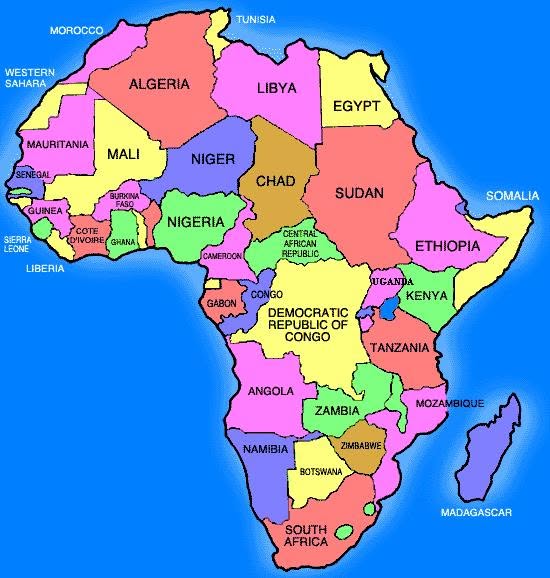
Recent developments across parts of Africa have raised significant concern about how Africans constitute themselves into a notable problem that Africa must confront and successfully navigate to reach its full potentials. Events involving South Africa, Ethiopia, Nigeria, Kenya, and Uganda bring to the fore a troubling pattern in which Africans and African authorities appear to be far more unswerving in the denigration of Africans through asserting their autonomy to the ruins of continental leverage.
Apparently, Africa is still dealing with the remnants of the slave trade era. Slave trade, as the name suggests, must be construed as a trade, which means that there is both a willing seller and a willing buyer. What is more significant is that in 2026, there is “Afrophobia,” where Africans apparently are more afraid of fellow Africans than they are of the Chinese, with growing economic influence in the continent, or Europeans, their former slave and colonial masters. The Republic of South Africa has elevated xenophobia to a state policy that enjoys tacit government support. The Government in South Africa has allowed some of its citizens to set up a parallel government that has the authority to issue threats, public intimidation and abuse, dictate public order, and secure compliance. It is regrettable that the government in that country is not seeing how it is aiding its citizens to weaken the government and undermine government authority. Fellow Africans have been subjected to inhuman treatment, beaten, stripped, and their businesses looted on African soil, where the African Continental Free Trade Area is supposed to be in force. Thousands have been coerced into returning to their home countries. Ghana, Zimbabwe, Malawi, Nigeria, and many other countries have officially assisted their citizens to leave the country. There are several calls for South Africa and its businesses to be boycotted across Africa. But this was the same South Africa that enjoyed the solidarity of sovereign African states to stamp out apartheid.
In fact, Nelson Mandela, recalling the roles played by African countries to end segregation in South Africa, paid homage to former Nigerian leader, Chief Olusegun Obasanjo, who led the Eminent Persons Group in the negotiations that strengthened the ANC’s position, all of which helped to stabilize South Africa after apartheid collapsed. Also, Mandela recalled with clarity how his first point of call after his release was Lusaka, where he met “a number of African heads of state,” including Robert Mugabe of Zimbabwe, Kenneth Kaunda of Zambia, Jose Eduardo Dos Santos of Angola, Quett Masire of Botswana, Joaquim Chissano of Mozambique, and Yoweri Museveni of Uganda.” African solidarity was fundamental to South Africa’s freedom. The support for South Africa by Africans was total. “I began to tour Africa…everywhere I went, there were great enthusiastic crowd so that even if I felt weary, the people buoyed me. In Dar es Salaam, I was met by a crowd estimated at half a million,” Nelson Mandela recalled in his biography. Today, the same people who withheld nothing in the quest for a free South Africa are harassed in South Africa and hunted down like wild animals, asked to vacate the country, and maimed, not by the Boers but by fellow Africans.
In Ethiopia, a recent visit by Nigeria’s Minister of Foreign Affairs, Ambassador Bianca Odumegwu Ojukwu, to AbaSamuel Prisons, Addis Ababa, Ethiopia, has exposed how thousands of Nigerian inmates are wasting away in AbaSamuel Prisons, Addis Ababa, Ethiopia. While crime and criminality are condemned and cannot be justified under any cover of PanAfricanism, there is a new twist that has emerged from the visit, exposing a deliberate “capture” of many Nigerian legitimate businessmen whose business capital is then seized, and they are subsequently incarcerated. Mr. Francis Chukwuma, a Nigerian businessman based in Switzerland, alleged that his business capital was seized during his transit from Dubai, and Ethiopian Airlines made a brief stop at Addis Ababa. Without any judicial process, he was detained, according to his account. But when he showed his European passport, he was promptly released, but his money was seized. However, despite court order to the airline to release his money to him, they have not complied, instead, only $10, 000 was released to him out of $80, 000. He also alleged that so many Nigerians have had their money seized without any justification or judicial process. This scenario interrogates the general assumption that every Nigerian held in an Ethiopian prison had committed a crime. It also provides a particular nuance to this growing hostility of Africans towards other Africans.
About two days ago, former Justice Minister of Kenya, Martha Karua, was blocked from entering Uganda, for reasons that are still unclear. She was refused entry by Ugandan authorities, although the President of the Law Society of Kenya, who was travelling with her, was allowed entry into Uganda.
These developments highlight a troubling pattern that may suggest that Africa, or perhaps Africans, are reverting to hostile isolationism. Therefore, these stories are not mere events; they are experiences that are shaping how Africa has chosen to respond to continental synergy in an age where regional and continental alliances are powerful.