By Ebuka Onyekwelu, Ph.D
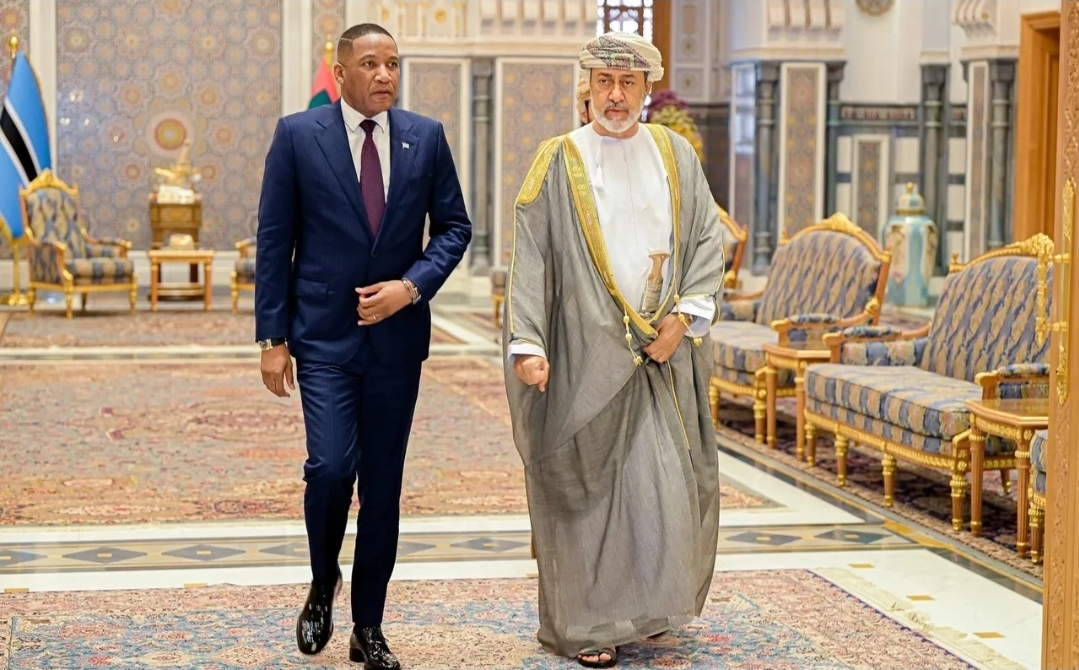
The Government of Botswana, in Southern Africa, has signed a mining and energy deal with Oman, an oil-rich country in the Middle East. This deal, according to a statement from the presidency of Botswana, marks a significant move towards a closer economic rapport with the Sultanate of Oman. The deal signed by President Duma Boko of Botswana and Sultan Haitham bin Tariq of Oman included exploration of iron ore, copper, gold, and graphite.
This deal with Oman by Botswana is a bold shift in an effort to diversify the country’s economy, whose mainstay is diamonds. Part of the agreement on energy between the two countries includes developing a 500 megawatt solar plant, according to the statement from the presidency of Botswana.
Botswana’s move is targeted at containing the country’s fallen revenue from diamond sales due to low prices and concerns about artificially sourced diamonds. This move is expected to boost Botswana’s economic options as it prepares for a post-diamond era in the near future.
However, the statement from Botswana’s presidency did not disclose the cost of the deal with the Sultanate of Oman.
Almost all African countries have been trapped in the exportation of raw materials. This reflects the condition of African countries, except for a handful, as purely extractive hubs, with no form of serious production. For decades, this pattern has persisted in post-independent Africa with no thought to diversification, amidst present concerns over the relevance of those raw materials in the near future. The worst is that years of exploration have left most of the African countries worse than they were before, with many trapped in resource conflicts. Consequently, the political economy of many African countries has been chaotic, stagnated, and unable to address local problems.
This move by Botswana represents a shift from the norm, as it maintains its lead as one of the most well-governed African countries.