By Ebuka Onyekwelu, Ph.D
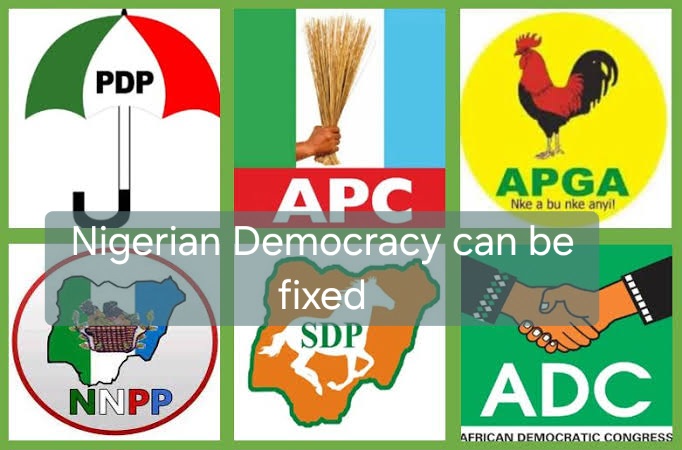
Many people often overlook what goes on in Nigerian political parties while conversations arise on Nigerian democracy. Yet, interestingly, no one can speak honestly about fixing Nigerian democracy if they did not first speak of how to fix Nigerian political parties. Nigerians conveniently blame the government, but the government is not formed in isolation. Every government or elected public officer was sponsored by a political party. Unfortunately, in Nigeria, political parties are mere agents conveying ambitious politicians to their destinations. Not surprisingly, these parties take advantage of their gateway position to our democracy and supervise the most bizarre form of fraud under the cover of ‘politics.’ Thereby reducing what should ordinarily be a contest about bright ideas to mere trading in Naira and Dollar.
Party mismanagement and the strange culture of subletting its conscience to the highest bidder are the biggest challenges facing Nigerian democracy. For Nigerian politicians who are willing and ready to negotiate and buy the ticket of a party of choice for an elective position they wish, they are not being sponsored by the party. They have bought the party over and are just on a personal journey that fits their whims. This is exactly why Nigerian democracy is where it is. A politician will need the party. The party will also need money to yield its platform. Long story short, the politician needs money. This results in corruption and all manner of poor performance because money is elevated as the singular most important factor. This is the life cycle of Nigeria’s democracy.
As the conversation on Nigerian democracy has resurfaced ahead of next year’s election, and many people are focused on the government or the Independent National Electoral Commission – INEC, not many have imagined that Nigerian political parties are fundamental in the ongoing conversation. This week alone, many political parties have published the cost of nomination and expression of interest forms for various elective positions. From that list, on average, the idea is that for one to genuinely aspire to serve the people, he or she must be ready to part ways with a stupendous amount of money that matches the height of the office he or she aspires to. Yet, Nigerians are not outraged. But that has significantly blurred the line between public service and business. Applying for public service now looks like a business where there are investments, risks, and the expectation of returns on investment.
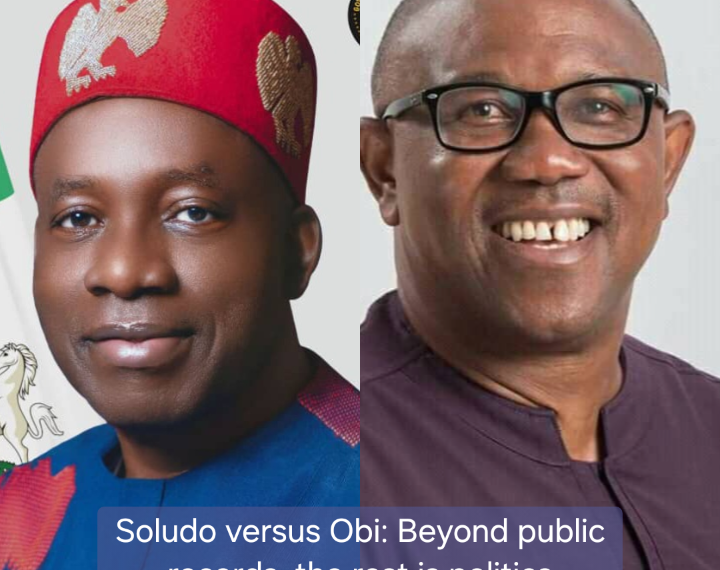
That is why what the All Progressive Grand Alliance – APGA, did today during its zonal stakeholders’ meeting matters a great deal. The party announced that it will follow the direct primary process using option A4. The National Chairman of APGA, Barrister Sly Ezeokenwa, reiterated that the party members will vote openly for their choice aspirant at the ward level and encouraged party members to use their phones to record proceedings of this process in their wards. In his speech, the National Leader of APGA, and the Governor of Anambra State, Professor Charles Chukwuma Soludo, noted that aspirants in the party can only purchase nomination forms, attend screening, and only after the selection process has been completed, can they purchase the expression of interest form. This is happening when all other Nigerian political parties have fixed an amount for their nomination form and another amount for their expression of interest form. It is obvious that there is a quiet reform the National Leader of APGA is spearheading, and if Nigerian democracy must find its relevance and fulfill its aspirations, the ongoing reform in leadership recruitment by APGA as a party deserves a close study after which it should become the standard.
But if, as most Nigerians do, we focus on the government’s poor performance without paying any attention to the process of the emergence of leaders, clearly, we are missing it, and Nigeria’s democracy will continue to suffer for it. No matter INEC’s neutrality and patriotism, if an election is conducted among very poor quality candidates in diverse political parties, no matter who wins through that credible process, there will still be a leadership gap, and poor governance will still thrive. Therefore, the duty of those who truly desire to save Nigerian democracy must commence with saving the country’s political parties from their desperate extortionist nets and exploitation of their members who are desirous of public service.