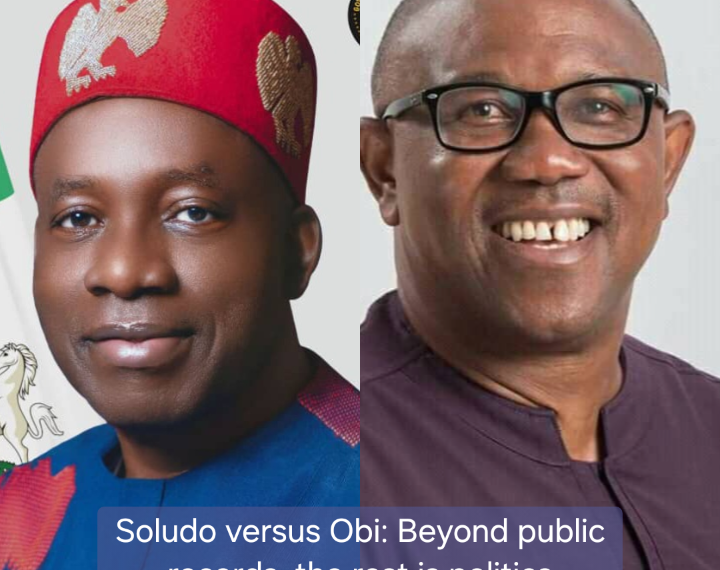

Editor’s note: Uzu Okagbue, in this insightful piece, draws a sharp line between how political players conceive of politics and how the citizens largely see the same art. For politically exposed persons, interest and individual aspiration come first, before public service in the real sense. This, he argues, is radically different for the citizens. It is, therefore, imperative, he submits, that the citizens must be nuanced and less emotional in the art of politics.
By Uzu Okagbue
Political participation, for many who watch from a distance, is often mistaken for a sacred calling driven purely by ideology, loyalty, or love for the people. That is where many citizens lose their objectivity. Politics, in its rawest form, has always been a marketplace of interests before it ever becomes a platform of service.
The ordinary observer sees a politician standing with one camp today and standing comfortably with yesterday’s adversaries tomorrow and begins to wonder where principle has gone. But what appears confusing to the public is often very simple to those inside the arena. Interests move men faster than convictions. Interests redraw relationships that the public once believed were permanently broken. Interests can make former enemies suddenly discover a common language where bitterness once lived.
That is why no citizen should allow themselves to be misled by emotional slogans that suggest every political movement is about public welfare alone. It sounds noble. It comforts the ears. It flatters the followers. But beneath the polished speeches and carefully rehearsed alliances, personal preservation, strategic advantage, access to influence, and the pursuit of power remain the first calculations in all political decisions.
This does not mean the public good never matters. It does. But in many cases, it enters the conversation only after personal political survival has been secured. The difference is often determined by the depth of conscience of the individual involved. A leader with conscience may eventually align personal ambition with public benefit. A leader without conscience may never look beyond self-interest at all.
The painful truth many followers resist is that politicians are rarely as emotionally attached to political camps as their supporters are. Supporters often defend individuals with a passion greater than the individuals defend the very principles they claim to represent. While followers are fighting battles of loyalty, many politicians are negotiating tomorrow’s alliance behind closed doors.
That is why the public must learn to see politics without illusion. No politician should be elevated beyond human nature. No alliance should be romanticized beyond reason. And no movement should be interpreted without first asking the most honest question in politics:
Whose interest is being protected, and at what cost?
This is because, until citizens begin to understand that interest is the first language spoken in politics, they will continue to mistake strategic movement for betrayal, and calculated alliances for ideology, when in truth, many political journeys begin and end at the altar of personal interest.